

The Fève: The Hidden Treasure of the Galette des Rois
A tiny object with a long history
Every January in France, the Galette des Rois returns to pastry shop windows. Golden, flaky, generous. But what truly makes the ritual memorable is not the puff pastry or the frangipane — it is the fève, hidden inside.
Small enough to fit on a spoon, the fève carries more than luck. It carries history, symbolism, craftsmanship, and sometimes even luxury.
From a real bean to a royal symbol
The word fève originally meant exactly that: a dried broad bean.
Long before galette became a pastry, ancient Greeks and Romans used beans hidden in cakes during winter festivals. Whoever found the bean was named “king of the day,” a symbolic reversal of social order during celebrations like the Roman Saturnalia.
When Christianity adopted the Epiphany tradition, the ritual remained. The bean became a symbol of fate, chance, and temporary power. Eating cake was no longer just about pleasure — it became a game.
The birth of the porcelain fève
Until the 18th century, real beans were still used. Then came a turning point. Porcelain manufacturers in France began replacing organic beans with ceramic figurines. This solved practical issues (hygiene, preservation) and opened the door to creativity.
By the 19th century, the fève had become:
– Decorative
– Collectible
– Narrative
Kings, saints, animals, everyday objects — each fève told a story.
Fabophilia: when fèves become collectibles
Today, the fève has its own collectors. They are called fabophiles. Some people collect by theme. Others by era, region, or pastry shop. Certain discontinued or limited-edition fèves can sell for surprisingly high prices. In France, fairs and exchanges dedicated solely to fèves take place every year — proof that this tiny object has become a cultural artifact.
Chefs, designers, and luxury fèves
In high-end French pastry, the fève is no longer an afterthought. Many renowned chefs now:
– Commission custom-made fèves each year
– Work with designers, illustrators, or sculptors
– Create limited series exclusive to their galettes
Some pastry houses have even introduced metallic, gilded, or gold fèves, turning the galette into a luxury experience. Finding the fève becomes a moment — sometimes even a marketing signature. In these cases, the fève reflects the chef’s identity as much as the recipe itself.
Rituals around the fève
Traditionally:
– The youngest person hides under the table
– They assign each slice blindly
– The person who finds the fève becomes king or queen
The crown is symbolic, but the rule often remains: the winner buys the next galette. This simple ritual is one of the rare food traditions in France that blends all generations, without formality, without ceremony — just shared cake and chance.
Why the fève still matters today
The fève survives because it connects several worlds at once:
– History and play
– Childhood memories and adult craftsmanship
– Food and design
– Popular tradition and haute pâtisserie
It turns a pastry into a story. And a slice of cake into an event. At its core, the fève reminds us that French pastry is not only about technique — it is about ritual, transmission, and meaning.
Where French Pastry Meets Tradition
French pastry is not only about recipes. It is about rituals, history, and transmission.
Learning French pastry in Paris
In our pastry classes in Paris, we teach more than how to follow a recipe. We explain why traditions exist, how they evolved, and what they mean in today’s professional pastry world. Understanding these details changes the way you bake — and the way you see French pastry.
From tradition to practice
French pastry has always been transmitted through hands-on learning. Techniques are learned at the bench, but culture is learned through stories, gestures, and shared rituals.
That is exactly what our classes offer: authentic techniques, real context, and a direct connection to French culinary tradition — in the city where it was shaped.

Hiding the Fève
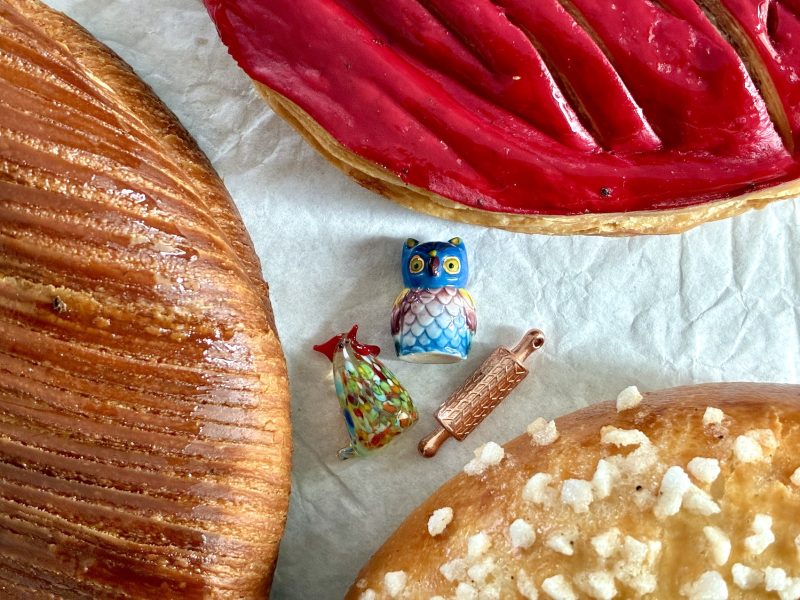
Fèves Kings cakes french pastry traditions

Traditional King’s Cake

Pistachio-cherry King’s Cake
